• About SENTRUM
    • Our Project Partners
  • What is Green and Sustainable Tourism?
  • Green Destinations
  • Green Ideas
  • Media Center
    • News and Announcements
    • Press Contact
    • Events | Gallery
    • Corporate Gallery
  • Blog | Columns
    • Blog
    • Opinion Columns
  • Global Sustainable Tourism Program
  • Awards
  • Newsletter
  • Reports
Newsletter
  • TR
    • Türkçe
    • English
Location and Historical Heritage Architectural Heritage and Conservation Model Cultural Fabric and Lifestyle Natural Structure and Sustainability Approach Local Economy and Production Structure
Location and Historical Heritage
Located in the Western Black Sea Region, southwest of Bolu, Göynük is one of Türkiye’s most distinctive settlements with its deep-rooted history and well-preserved urban fabric. Situated approximately 98 km from the city center, the district borders the provinces of Bilecik, Eskişehir, Ankara, and Sakarya. With a history dating back to ancient times, Göynük came under Ottoman rule after the Phrygian, Roman, and Byzantine periods. It continued to develop especially during the Ottoman era, becoming an important settlement. The urban texture that still stands today is one of the strongest reflections of this historical continuity.
Architectural Heritage and Conservation Model
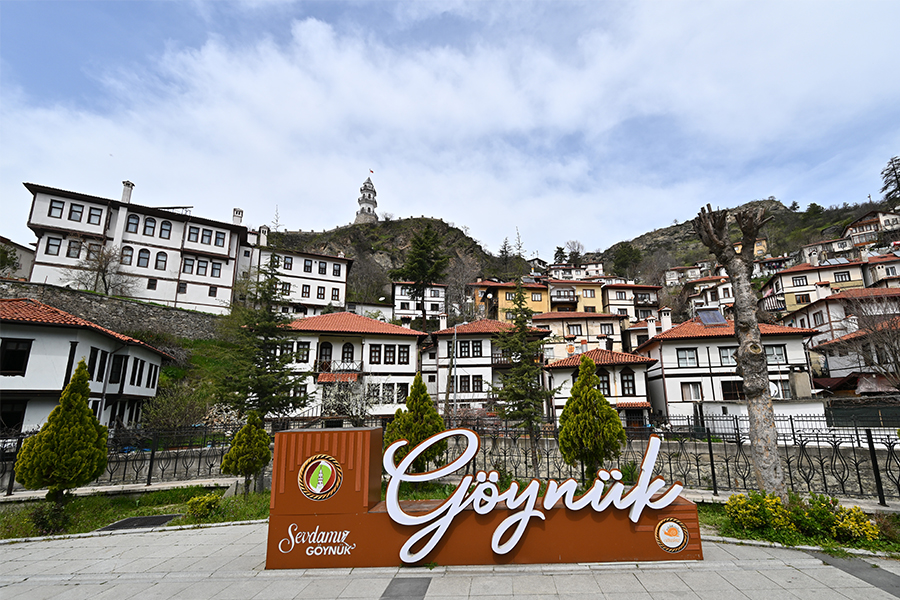
Göynük offers one of the best-preserved examples of Ottoman civil architecture. With its bay-windowed houses, narrow streets, mansions, mosques, tombs, and public buildings, it presents a holistic urban texture.
Architectural Heritage and Conservation Model
The declaration of the town center as an urban conservation site in 1983 and the implementation of a conservation-oriented development plan in 1991 have played a significant role in preserving this heritage. Today, more than 160 immovable cultural assets across the district are under protection. Akşemseddin Tomb, Zafer Tower, and traditional mansions are among the landmark structures that reflect both the architectural and cultural identity of Göynük.
Cultural Fabric and Lifestyle
In Göynük, cultural heritage is not merely a value of the past but an active part of everyday life. Traditional lifestyles, local production practices, and handicrafts are still vibrantly maintained in the district. As you walk through its narrow streets, the wooden craftsmanship, local markets, and daily rhythm offer visitors a genuine sense of being immersed in this culture. The local culinary tradition is also an essential part of this experience. Geographically indicated specialties such as uğut dessert, dik börek, and pumpkin phyllo dessert reflect Göynük’s rich gastronomy. In addition, weaving, wood carving, and traditional handicrafts are presented to visitors through experience-oriented activities.
Cultural Fabric and Lifestyle
Commemorations of Akşemseddin, local fairs, and traditional events are among the key elements that reinforce Göynük’s cultural continuity.
Cultural Fabric and Lifestyle
Göynük offers a rich experience to its visitors with both its historical and natural assets. Landmark structures such as Akşemseddin Tomb and Zafer Tower reflect the town’s historical identity, while natural sites around Çubuk Lake and Sünnet Lake provide an experience intertwined with nature. Moreover, Gürcüler Mansion and other historic mansions, which reflect the traditional way of life, carry Göynük’s cultural continuity into the present day.
Natural Structure and Sustainability Approach
Göynük offers a settlement intertwined with nature, with its forests, valleys, and natural water resources. These natural areas, which make up a large part of the district, are not only ecological assets but also key elements that define the quality of life.
Natural Structure and Sustainability Approach
Natural sites such as Çubuk Lake and Sünnet Lake provide visitors with a მშვიდ, nature-integrated experience, while Göynük’s inclusion in the “Cittaslow” (Slow City) network demonstrates that this lifestyle is also recognized at an international level.
Natural Structure and Sustainability Approach
In Göynük, the approach to sustainability goes beyond environmental practices and manifests itself as an integral part of daily life. Zero-waste practices, the use of renewable energy, and recycling systems are among the tangible examples of this approach on the ground.
Natural Structure and Sustainability Approach
Supporting local production models, ensuring the efficient use of resources, and implementing practices aimed at preserving the natural balance all contribute to Göynük’s development as a sustainable destination.
Local Economy and Production Structure
In Göynük, the economic structure is largely based on agriculture and livestock farming. Local production plays a crucial role in both the economic sustainability of the district and the continuity of its cultural heritage.
Local Economy and Production Structure
This structure also presents a significant opportunity for sustainable tourism. Integrating local production with tourism not only ensures that economic value remains within the community but also offers visitors a more authentic experience.
Local Economy and Production Structure
Göynük is one of the destinations addressed within the scope of the SENTRUM project, with a focus on sustainable tourism and local development. In this context, the priority areas include:
• preservation and promotion of cultural heritage
• support for local production and women’s entrepreneurship
• sustainable use of natural resources
• strengthening community-based development models
öncelikli çalışma alanları arasında yer almaktadır.
Göynük’s existing conservation approach and lifestyle provide a strong example for the practical implementation of SENTRUM’s green destination model.

Bolu, Göynük

Located in the Western Black Sea Region, southwest of Bolu, Göynük is one of Türkiye’s most distinctive settlements with its deep-rooted history and well-preserved urban fabric. Situated approximately 98 km from the city center, the district offers one of the best-preserved examples of Ottoman civil architecture. With its bay-windowed houses, narrow streets, mansions, mosques, tombs, and public buildings, it presents a holistic urban texture.

Göynük offers a rich experience to its visitors with both its historical and natural assets. Landmark structures such as Akşemseddin Tomb and Zafer Tower reflect the town’s historical identity, while natural areas around Çubuk Lake and Sünnet Lake provide an experience intertwined with nature. In addition, Gürcüler Mansion and other historic mansions, which reflect the traditional way of life, carry Göynük’s cultural continuity into the present day.

GÖYNÜK TODAY
Today, Göynük stands out as one of the leading destinations for sustainable tourism with its well-preserved architectural fabric, natural environment, and traditional way of life. Thanks to the balanced harmony of history, nature, and local culture, it offers visitors a calm, authentic, and holistic experience.
DON'T MISS THE DEVELOPMENTS
Never miss any news about SENTRUM!
Subscribe to our newsletter to discover the future of sustainable tourism and get the latest news about the SENTRUM project.
Sign up for newsletter
If you would like to receive our content by e-mail, sign up for our newsletter!
  • Newsletter!
  • About SENTRUM
  • What is Green and Sustainable Tourism?
  • Green Destinations
  • Green Ideas
  • Media Center
  • Blog | Columns
  • Awards
  • Newsletter
  • Reports
  • Global Sustainable Tourism Program
SENTRUM İletişim
  • Instagram
  • 𝕏
  • Linkedin
  • YouTube
  • Facebook
© 2024, SENTRUM All Rights Reserved.

We use mandatory, functional, analytical and marketing cookies for an active user experience and improvement efforts on our website.For detailed information on the use of cookies, you can review our Cookie Policy, change your preferences or proceed by accepting all cookies.

My Cookie Preferences

My cookie preferences

We use cookies on our website to evaluate our visitors' preferences for an active user experience and for our improvement studies. Apart from the necessary and functional cookies required for the operation of the site, analytical and marketing cookies will not be used unless you enable them, and you have the opportunity to withdraw your consent at any time. You can mark those that you allow to be processed, and you can review our text to have more detailed information about cookies.

Manage Consent Preferences
Necessary Cookies

These are cookies used for the functional and secure operation of our website. Failure to use these cookies affects the operation of the website.

Functional Cookies

These are cookies used for the development of website content in an appropriate and reliable manner and to increase customer satisfaction. The use of these cookies only prevents inappropriate use of website content.

Analytical Cookies

These are cookies used to help us improve our website by collecting information about how you use it.

Marketing Cookies

These are cookies used to increase customer satisfaction and our sales and marketing activities.